
Archaeology Tours
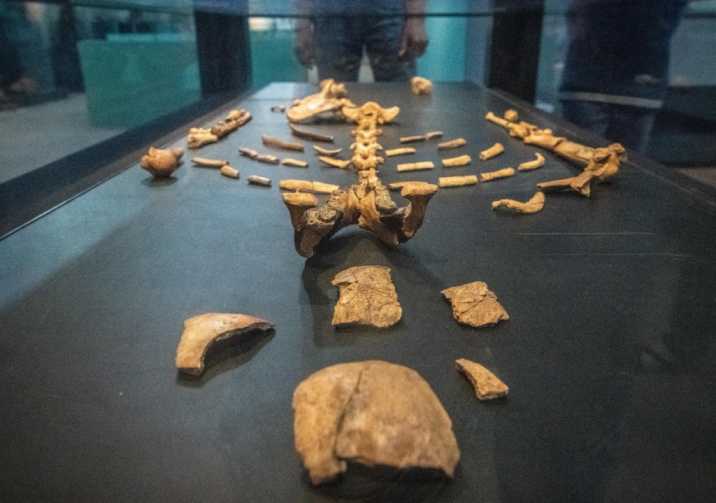
Archaeology Tours Ethiopia is the oldest independent country in Africa and one of the oldest in the world; it is one of the oldest Christian civilisations in the world and has the longest archaeological record of any country on earth. It is also credited with being the original home of humanity with the discovery of fossilised remains of hominid species, Stone Age paintings, and evidence of cereal cultivations at different archaeological sites. Ethiopia is the land of the queen of Sheba, the final resting place of the Ark of the Covenant, the cradle of mankind. Ethiopia’s first modern encounter with the ancient world was in 1974. It made headline news everywhere; anthropologists around the world took note: “Lucy” had been discovered. At the head of the Great Rift Valley in a special place called Hadar, where the African and Arabian tectonic plates converge, a team from the Institute of Human Origins of Berkeley, California, found the oldest hominid remains discovered. Led by Donald Johanson, the team utilised the latest dating technology to put the partial skeleton at 3.5 million years old; until this point, the oldest known fossil was 2.5 million years old.
Thank you for reading this post, don't forget to subscribe!The fossil, which turned out to be female, and by Dr. Johanson’s girlfriend, suggested she be named “Lucy” after the Beatles’ song “Lucy in the Sky with Diamonds,” which was played in a camp shortly after the discovery and repeatedly during the night of the discovery. By Ethiopians, she is known as “Dinkenesh,” which means “You are wonderful” in Amharic. A biped, Lucy stood about three and a half feet tall and added support to Raymond Dart’s theory that australopithecines walked upright. Johanson and his team were also able to deduce from Lucy’s ribs that she was vegetarian and from her curved finger bones that she was probably at home in trees. To this end, palaeoentomological and archaeological work continues at Hadar and a number of other sites along the Ethiopia section of the Great Rift Valley and in the omo Valley. These often bleak, sparsely inhabited regions have already yielded some fine examples of Stone Age tools from deposits up to 1.7 million years old and remains of Homo erectus from deposits some 800,000 years old. One of these sites, Melka Kunture, is relatively close to Addis Ababa. Since 1965, geologists and archaeologists have had a compound there, some 50 kilometres south of the capital on the Addis Ababa Butajira road, set up to excavate that which the earliest humans left behind. Many examples of beautiful two-edged hand axes, obsidian scrapers, and sets of bolas, the round stones used several together in nets to throw at animals, have been found. Fossilised bones of hippopotamuses, rhinoceroses, elephants, and antelopes have also been unearthed here.
But early man was as much an artist as a toolmaker; some fine, delicate paintings have been discovered on cave walls, such as at Porc Epic near Dire Dawa and Dilla, about 520 and 300 kilometres, respectively, east and south of Addis Ababa, estimated at 400,000 years old. Not as ancient, but equally fascinating relics of the past are the crudely fashioned stone monuments often referred to as monoliths or stelae found at Dilla and Tiya, a small village about 90 kilometres south of Addis Ababa. The Tiya location, whose monuments have markings believed to date from about 1300–1500 AD, has been proclaimed a World Heritage site. But perhaps the world’s most famous and mysterious stelae still stand silent sentry in Ethiopia’s northern region, in Axum, once reputed to be the home of the legendary Queen of Sheba. Although its very early history is still unknown, Ethiopia’s legend’s first recorder in the fourteenth century, Kebre Negest (Book of Kings), proclaimed Axum as Sheba’s tenth-century BC capital.